
Transforming waste into opportunity: the power of enterprise development
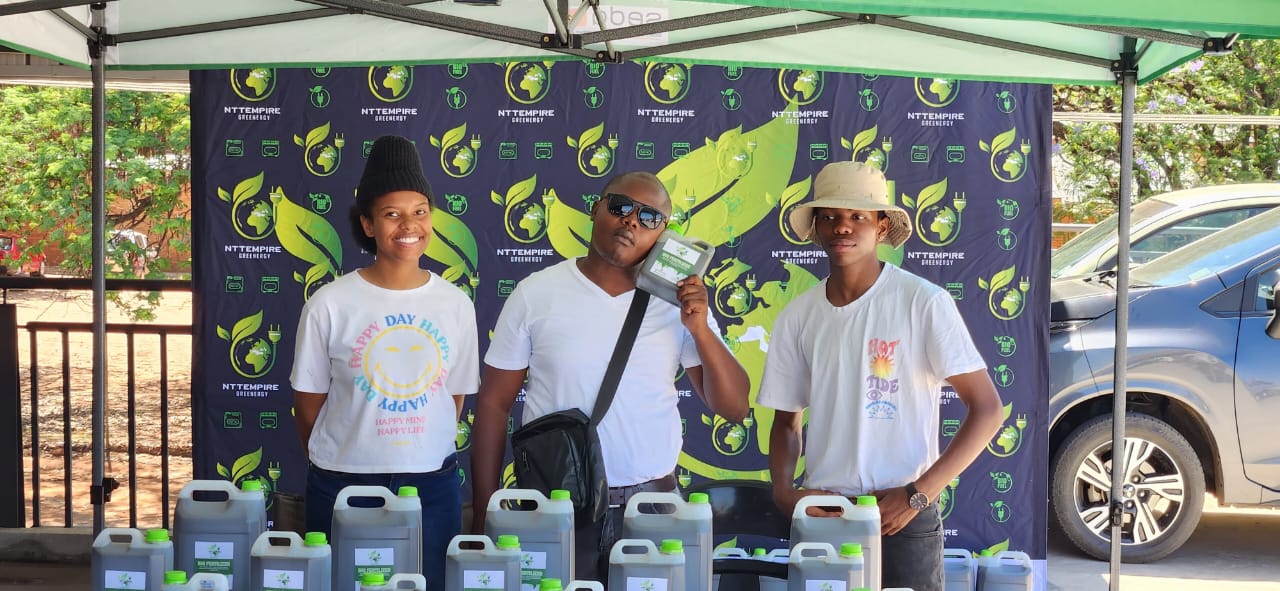
Neo Lelaka’s bio-fertiliser business, NTT Empire – a 100% black-owned company – is testament to the power of good enterprise development and support that goes beyond simply funding fledgling entrepreneurs. “My focus was to raise funds for my new business venture, but I realised that I lacked a lot of information regarding how to market, compliance and how to run a business overall, which I learned while on the programme,” he says.
Lelaka is referring to Zimele, Anglo American’s enterprise development programme established in 1989 to develop emerging black businesses, empower entrepreneurs, and support SMMEs to make a difference in their communities.
Lelaka, who hails from Mahwelereng, Mogalakwena, in Limpopo, says his business idea was first sparked in 2017 when there was an issue with waste collection in the area. “I started exploring ways to manage the waste,” he says, “and I noticed that after it was sorted for recycling, there was still a great deal of bio-digestible waste left over.”
He started researching biomass and how it could be repurposed and discovered that the methane it produced could be harnessed for renewable energy. He was working in a civils and construction company when the 2020 lockdowns happened, and since they had to stop operations, it gave him time to explore the idea further. That is when he realised that he would need a bigger space and increased capacity to produce biofuel from methane.
Then, in 2022, a friend told him to pitch his idea to Zimele. The rest, as they say, is history. But that would require Lelaka to pivot – from biofuel to bio-fertiliser.
“My business mentor advised that I start small and use what I have. That led me to try out the production of bio-fertilisers.”
Lelaka’s problem-solving skills, attained from his previous work in civils and construction, were put to good use when he realised it was more realistic and more doable to produce fertiliser from the biomass. “It’s liquid gold,” he says. “It’s environmentally friendly and a great soil additive, putting the balance back into the soil. And the microbial content feeds on pests.”
We supply to homeowners, nurseries, farmers and companies with gardens or operate in the space. Our bio-fertilizer is a 3-in1 microbial blend that is used as a soil preparation agent to maximise farming results, organic fertilizer and natural pesticide.
Over 18 months, Lelaka not only received business training, coaching and mentoring, but was assisted with compliance processes and exposed to procurement opportunities in the area, among other interventions. Today the business employs 12 people and Lelaka has even trained interns from the Youth Employment Service (YES), and he attributes his success to a combination of his own grit and hard work, and the stellar support he received from Zimele.
Lelaka’s advice for other young entrepreneurs is simply to start small. “Speed and scale don’t matter; direction is more important,” he says. “And strive for ownership. The fact that my name is on my bio-fertilisers means I must make sure they are up to standard. Use what you have, and make sure your business is well-run. Chase excellence – it speaks for itself. That’s how the big brands make it.”
NTT Empire currently also offers cleaning, gardening and horticulture services. Lelaka plans to expand his business to use waste to produce methane, developing a biodiesel plant and supply and maintain spekboom plants to businesses looking to reduce their carbon footprint, because they are carbon sponges and will absorb greenhouse gases collecting.
“Sorting the waste gives me chances to explore different avenues,” says Lelaka. “We see a lot of opportunities in producing cooking oil, so I am exploring that option and hoping to develop that in the next five years. We also collect a lot of cow dung, which is a major producer of greenhouse gases.”
SMEs are often hailed as the backbone of a healthy economy: driving growth, providing employment opportunities and opening new markets. But the challenges of the fledgling entrepreneur are significant, especially in South Africa where many people not only don’t have the funding to start their businesses, but crucially, also don’t have the business knowledge and social capital required. Programmes like Zimele aim to close this gap.