

From “lost student” to lecturer and competition winner – a journey of discovery
Lilja Hastie could never have imagined herself as a lecturer, jewellery design competition winner and business owner.
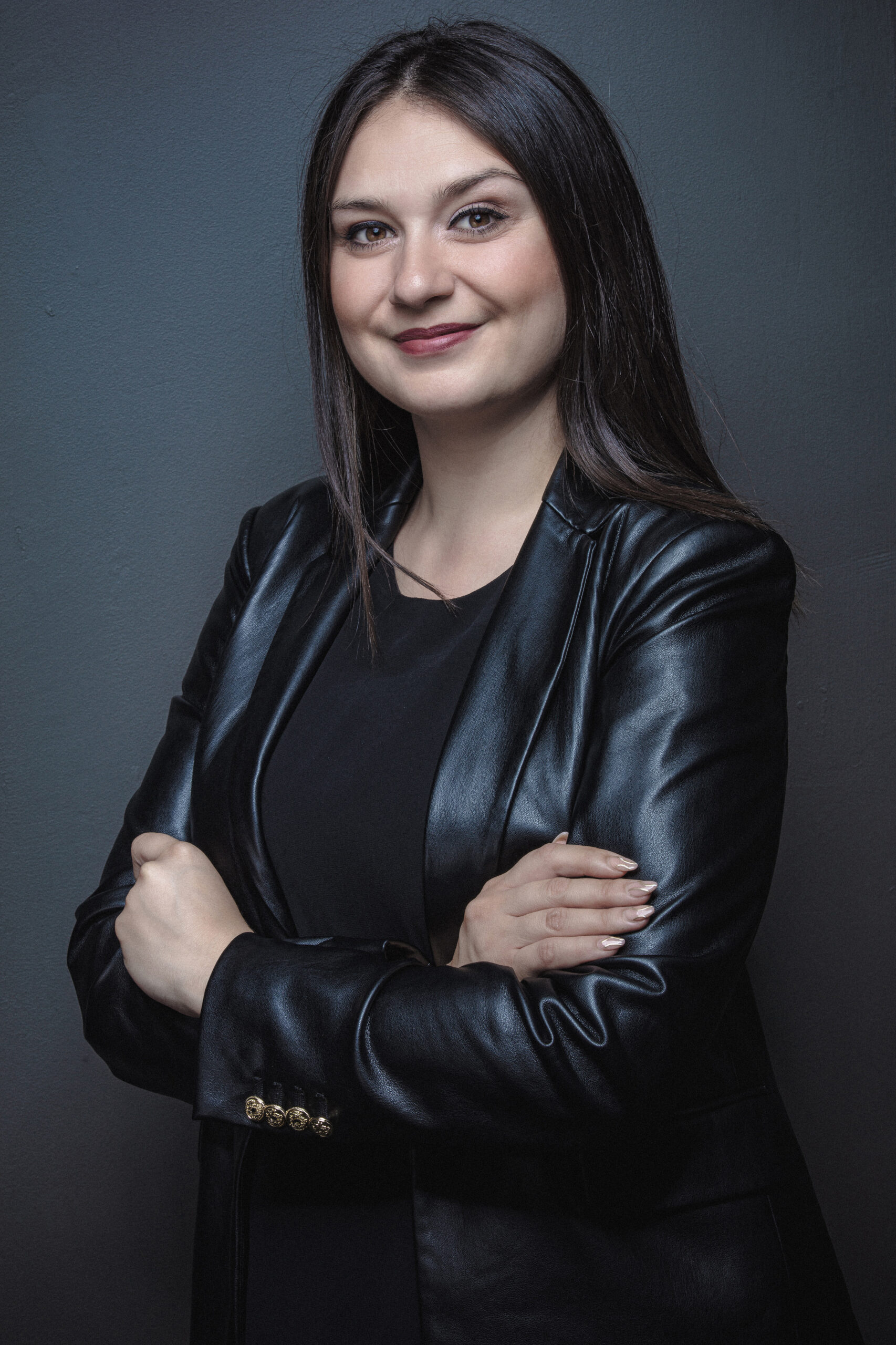
“I did very badly at school,” she says. “I was a bit of a lost student. I knew I was creative, but I really struggled, and it really cut me off from several opportunities, because I didn’t get the traditional university entrance.”
She describes the next five years as an extended gap year, where she continued to feel lost, and tried various options. Eventually, at age 23, she decided she had to do something – rewrite matric, if necessary. But aptitude testing revealed that she had a 3-D, creative mind, and she started to look for courses that matched.
“Jewellery was one of the options offered at Tshwane University of Technology, and I enrolled, and even though there were many tears, after struggling so long, suddenly I was a straight-A student,” she says.
While she was in second year, she entered the Shining Light Awards – a jewellery design competition run every two years by De Beers – as part of a collective that the department entered. One day she arrived at university to discover she was one of the 12 finalists.
“One of my best friends was also a finalist,” she recalls. “So off we went, and I ended up winning!” She says it was surreal – overnight she had to deal with the press, and suddenly people knew who she was, and she had some exciting studies ahead in Milan as part of the prize.
“It was such a nice carrot to have in front of me,” she says, “to finish my degree. And so I did graduate, and I did so cum laude, which I’m very, very proud of.”
Then it was off to the Politecnico di Milano, Italy’s largest science-technology university. “I
rocked up there on the first day with my jaw on the floor when I saw the standard of the people who were in my class,” she says. But she worked hard, cried some more, made some friends, and finished with stellar results, returning to South Africa just in time for the Covid-19 lockdowns.”
Since then, she has been working in trade, and has returned to TUT as a lecturer. “It’s been crazy, because it’s been 10 years since I was in first year, and I’m still there every day, and I’m still teaching the students, and I absolutely love it,” she says. “I’ve also worked on various collaborative projects with De Beers, like Tirisano Mmogo, which is a collective of different tradespeople in our industry, such as diamond cutters and jewellers and metal concentrators. I was on the panel of judges the previous round of the Shining Light Awards, which was a total feather in my cap.”
What the competition gave her most, however, was a career boost, she says – she has been catapulted to places she might never have arrived at of her own accord, and found herself in rooms she might never have entered.
“I’ve since started my own brand, Lilja Hastie Jewellery, and that turns three years old in August. One of the challenges has been being a creative and not necessarily understanding all of that right brain stuff – like running a business! But I’m figuring it out as I go, and there’s a limit to how much someone can prepare you for that.”
Another challenge, she says, is that your creativity can take a knock when you witness the work of your competitors, and feel like you’re in a rut or don’t have what it takes. “But it helps, creatively, being around students and other lecturers, she says. That’s been a very nourishing environment.”
Her advice for other aspiring jewellers is that talent is not enough. “The number one defining factor that is going to get you to the next level is work ethic,” she says. “Talent goes a long way, absolutely, but it’s not the thing that makes you wake up at five o’clock in the morning to have the edge on your colleagues. And statistically, it’s not always the talented ones that actually make it. It’s usually the hard workers.”
As for the future, Hastie is focused on her business now, and on expanding her range. “The South African market is very much focused on bridal, but the US market is more fun,” she notes. “They tend to buy jewellery for the sake of buying jewellery. I want to start making more fun, more playful stuff – in fine metals, in diamonds – and experiment with what that market could offer me on a more global scale.”