
INTERVIEW: Odette van der Haar on Creativity, Leadership and Living with Purpose
When it comes to making waves in South Africa’s media and marketing scene, few people have a story as inspiring as Odette van der Haar’s. She’s not just the CEO and founder of The Exponential Company, she’s also the creative force behind some of the country’s most exciting TV content, including co-producing The Morning Show on eTV. From directing and presenting to steering global agencies, Odette has worn just about every hat in the industry — and worn them well.
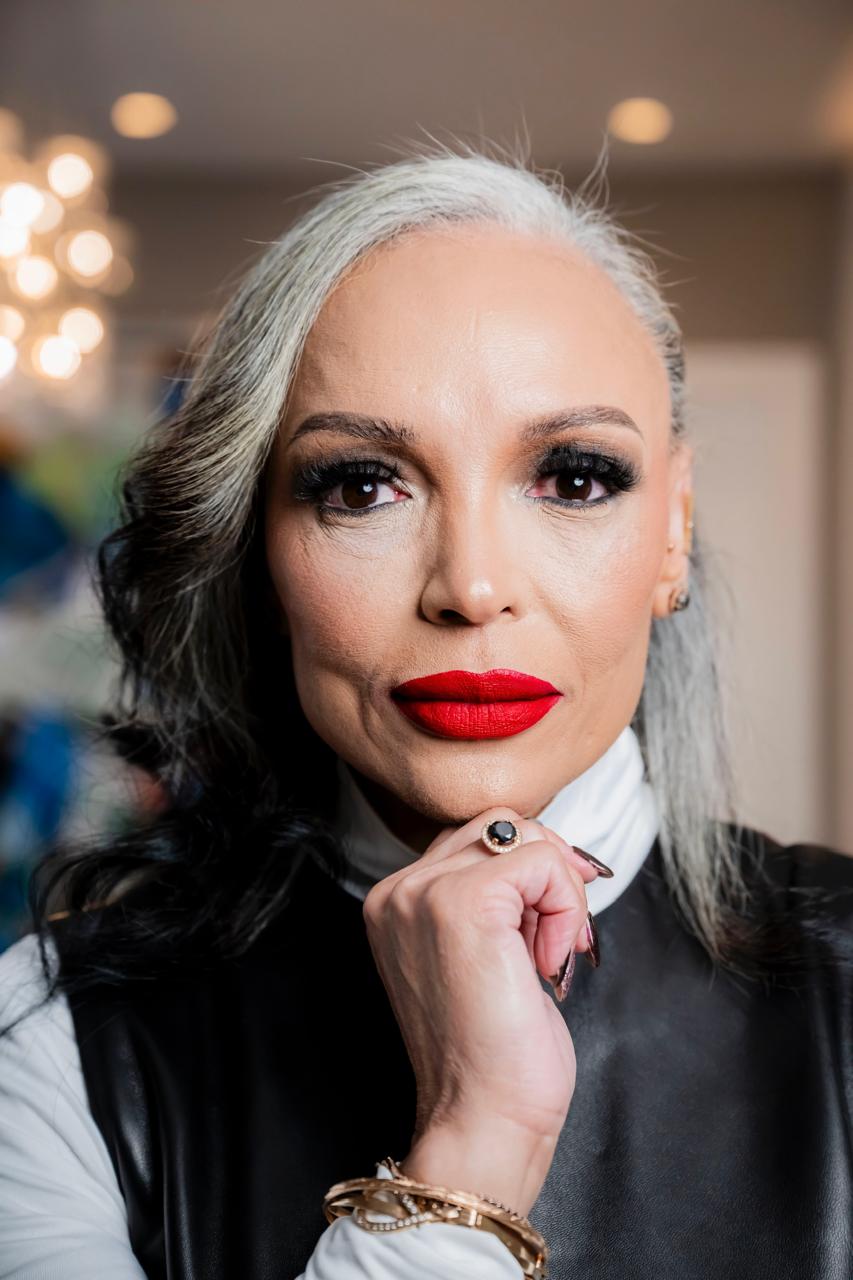
What makes her stand out isn’t just the big titles or awards (and trust us, there are plenty), but her passion for transformation, her drive to empower young people — especially women — and her belief in living with “no regrets, only life lessons.”
Today, we got a chance to step into her world, hear her journey in her own words, and find out what keeps her chasing her “better self” every single day.
- You’ve had such a multifaceted career across media, marketing, advertising, and communications — from presenting and producing to being at the helm of major organisations. Looking back, what key moments shaped you into the leader you are today?
Throughout my career, I have been fortunate to work across the diverse sector that is the media, marketing, advertising, and communications industry, and position held or project undertaken contributed significantly to my growth and experience holistically which groomed me for leadership.
My experience as a presenter and producer instilled in me the importance of storytelling, audience connection, and adaptability — skills that remain at the core of effective leadership. My roles in strategic marketing and advertising exposed me to the power of data-driven decision-making, creative collaboration, and building brands that resonate with people.
Having had the privilege of fulfilling executive and leadership positions within major organisations has been pivotal during my career. Leading teams through change, driving innovation, and navigating both challenges and opportunities taught me resilience, accountability, and the value of empowering others to excel – exactly what I needed to navigate entrepreneurship.
Throughout my career, there were moments where I had to make bold, sometimes difficult decisions — whether launching new initiatives, restructuring operations, or repositioning a brand — all of which helped shape my confidence as a leader who is responsible for clients’ budgets. These experiences reinforced that leadership is not only about vision but also about execution, integrity, and inspiring trust which I don’t take lightly – it’s shaped my leadership style into one that is strategic, people-centred, and results-driven.
- As the Founder and CEO of The Exponential Company, what inspired you to launch the business, and what makes your approach to media and content production unique?
The Exponential Company was born out of my passion for storytelling and my belief in the power of media to influence culture, shift perspectives, and create meaningful connections between brands and consumers through storytelling. Having worked across broadcasting, advertising, and communications, I recognised a gap for a company that doesn’t just produce content, but strategically builds narratives that are impactful, scalable, and future-focused.
What makes my approach unique is that I am able to marry creativity with strategy exponentially. I don’t see content as a stand-alone product — I see it as part of a broader ecosystem that drives engagement, brand equity, and long-term value. By combining traditional media expertise with data-driven insights and innovative formats, I am able to ensure that every project I work on and deliver is not only visually compelling but also aligned with my clients’ bigger goals. My focus is always on creating exponential impact — content that not only travels, influences, and resonates but delivers a tangible return on investment.
- Women’s Month is about celebrating progress while recognising the work still to be done. What does Women’s Month personally mean to you?
Women’s Month is both a celebration and a call to action. For me personally, it’s a reminder of the remarkable progress women have made — breaking barriers, leading industries, and reshaping narratives while highlighting the responsibility that we all share to keep pushing for equality and inclusion.
Yes, we honour the women who paved the way for equality but we are not yet where we ought to be in society or the boardroom – we need to recognise the challenges that remain, and to create platforms for new voices to be heard. Women’s Month inspires me on a very personal level to continue mentoring, advocating, and opening doors for other women, because true progress is not just about individual success but about collective empowerment which is why I will use my voice at every opportunity to influence and to play my part to ensure that the next generation of women have fewer obstacles and greater opportunities.
- As someone recognised among the most powerful and influential women in business, what challenges have you faced as a woman in leadership, and how did you overcome them?
Like many women in leadership, I faced moments where my capability was underestimated or where I had to work harder to have my voice heard in the workplace. During the early days of my career, just as the country was transitioning into the new post-apartheid dispensation, there were instances where bias whether conscious or unconscious meant that I had to constantly prove myself, often more than my male counterparts and more than my White colleagues. Though I am 30 years into my career and a lot has changed, a lot still remains the same. I am still required to prove myself by working so much harder than my male colleagues and oftentimes, than my White colleagues. What has helped me overcome these challenges is my resilience and work ethic. I am not afraid of working hard or doing the work required to get the job done – even if I am in a position of leadership and am required to seep the floors. I am results driven and focus on delivering the required results more than I am of any job title. Equally important is that over the years, I learned to turn challenges into opportunities — using setbacks as fuel to sharpen my skills and refine my leadership style. Every experience is a good experience because I learn and grow into a more empathetic, strategic, and determined leader irrespective of good or bad experiences because both motivate me to create spaces where the women I am in contact with can feel seen, heard, and supported.
- You were a custodian of the Take a Girl Child to Work Day initiative. How important is mentorship and visibility for young women entering male-dominated industries?
Mentorship and visibility are absolutely critical for young women stepping into not only male-dominated industries but any industry. When young women can see someone who looks like them succeeding, it sends a powerful message that their ambitions are valid and achievable. Visibility provides representation, and representation builds confidence. Equally, mentorship creates a bridge — it equips young women with guidance, networks, and the practical tools they need to navigate spaces that can often feel intimidating or exclusionary.
During my time as custodian of the Take a Girl Child to Work Day initiative, I saw firsthand how transformative exposure can be. A single day of access to professional environments often sparked dreams and career paths that young women hadn’t even imagined for themselves. For me, the true value of mentorship lies in ensuring that mentorship is not just symbolic, but sustained and intentional. Mentorship must creating ecosystems where young women are not only welcomed but actively supported to grow, lead, and excel or else it’s ineffective and a waste of the mentor and mentee’s time.
- Many young women look up to you as a role model. What advice would you give to women who aspire to leadership in media and business?
My advice to young women aspiring to leadership in media and business is to start at the bottom, learn everything there is to know about the industry so that they are empowered with the knowledge and skills to lead with confidence and authenticity. Young women must not wait for permission to take up space – they need to trust their abilities, bring their unique perspective to the table, and know that their voice matters. Most importantly, they need to be like a sponge and absorb everything there is to learn from everyone they encounter. Knowing when to listen and when to lead is a critical skill that must be mastered so read the room and learn to listen to learn, not listen to respond.
Most importantly, invest in lifelong learning. The media and business landscapes are constantly evolving, and the leaders who thrive are those who remain curious, adaptable, and willing to grow. Thus helps broaden your network which is important because no-one succeeds alone, and the right network can open doors that may otherwise seem closed. There’s a saying that your net worth is equal to your network. Remember that throughout your career!
If I learned anything throughout my career, it’s that leadership is not just about titles or positions. It’s about influence, impact, and the ability to uplift others as you rise. When you embrace that mindset, you don’t just succeed individually — you create pathways for many more women to follow.
- What role do you believe women leaders can play in driving transformation and inclusivity in South Africa’s creative industries?
I believe that women leaders have an important role to play in reshaping South Africa’s creative industries. Our sector thrives on diversity of thought and perspective, and women bring lived experiences, creativity, and leadership styles that broaden the narrative and make the industry more reflective of society as a whole. Women leaders can drive transformation by championing inclusivity not only in front of the camera, but also behind it whether it’s from the c-suite or the support teams. By being intentional about representation, opening doors for emerging talent, and challenging outdated norms, we can ensure that the industry grows in a way that is both innovative and equitable. For me, it’s about moving from tokenism to real change and creating sustainable opportunities where women and other underrepresented voices are not just included, but empowered to lead, shape, and define the future of our creative economy
- You were a co-author of the MAC Sector Codes, championing transformation and entrepreneurship. In your view, how far has the industry come — and how much further do we still need to go?
Being part of the team that co-authored the MAC Sector Codes was deeply personal for me, because it wasn’t just about penning a policy on paper, it was about laying the foundation for an industry that is fairer, more inclusive, and more representative of South Africa’s talent. Yes, progress was made but change requires much, much more. There are more black-owned agencies today, more women are in leadership roles, and there more opportunities for young creatives to enter the space than there were even a decade ago, and whilst that is encouraging, the rate of transformation is too slow and it’s still largely superficial. I know that transformation is possible when there is both intention and accountability but both are still lacking which is why the rate of transformation is so slow. We still have a long way to go. Too often, transformation is treated as a compliance exercise rather than a growth strategy. We need to go beyond ticking boxes and focus on building real ownership, sustainable businesses, and meaningful creative opportunities that truly change lives. The measure of success will be when transformation is no longer a separate conversation and it’s simply how we do business, you know, embedded in the DNA of the companies in our industry.
- Representation matters. How do you see women, particularly black women, changing the narrative in South Africa’s media and marketing landscape?
Representation changes what people believe is possible. For me, seeing more women, especially black women shaping South Africa’s media and marketing landscape is not just transformative, it’s inspiring. We should be afforded the opportunity to tell our own stories, on our own terms, to shift the narrative from one of exclusion to one of ownership. Black women bring perspectives that are too often overlooked or underrepresented, and when those voices are heard, the workplace becomes richer and more authentic – the result: creative output that is more connected to the audiences it serves. That is ultimately the goal so whether it’s leading agencies, directing campaigns, or creating content, women can redefine the stories that get told and how they are told if given the opportunity. Every time a Black woman takes up space in this industry, she is not only opening the door for herself but also for others who are watching and believing they can too. That ripple effect is how we change the narrative. We can’t just be present, we must be visible, vocal, and unapologetic about the value we bring.
- You live by the motto “no regrets, only life lessons.” Can you share a life lesson that has guided you through both challenges and triumphs?
One of the most important life lessons I’ve carried with me is that setbacks are not failures – they are learning opportunities. Early in my career, I faced moments that felt like roadblocks, whether it was being overlooked for opportunities or navigating environments where I had to prove myself at least twice over. At the time, those moments were difficult, but looking back, each one roadblock taught me resilience, patience, and the importance of trusting the process. This has guided me in both challenges and successes throughout my career. Challenges teach me not to dwell on what didn’t work out, but to ask: what can I learn from this, and how can it make me better? Successes keep me chasing the better me and success keeps me grounded, because I’ve learned that success is built on the back of the lessons learned along the way. My motto of living by ‘no regrets, only life lessons’ has given me the freedom to move forward courageously, taking calculated risks, embracing opportunities, and to grow through every season, knowing that nothing is wasted if it teaches me something valuable.
- Beyond your professional titles, you’re also a wife, mother, and grandmother. How do you balance these roles with the demands of leadership?
Balancing my roles as a wife, mother, grandmother, and leader has been one of the most important journeys of my life. I have never chased the idea of finding the perfect balance, I just try to be fully present in whichever role I’m in at that moment. There are seasons when work demands more of me, and others when family comes first and I’ve learned to honour those rhythms without guilt. What keeps me grounded is the understanding that my family is my anchor. They remind me of who I am beyond the boardroom. At the same time, my professional life has shown my children and hopefully one day it will teach my grandchildren what’s possible when you work with passion and purpose. The truth is that it takes intention, boundaries, and a lot of grace. I’ve learned to prioritise what truly matters, to lean on my support system, and to forgive myself when I don’t get it perfect. Success for me is not just measured by achievements at work, but by the love, connection, and legacy that I build at home.
- When you look at the next generation of women leaders — in boardrooms, studios, and beyond — what excites you most about the future?
What excites me most about the next generation of women leaders in South Africa, especially in the creative industry and entrepreneurial spaces, is how boldly they can show up. Gone are the days of needing to ask for permission to lead or to create. Today, women can carve out their own lanes, own their stories, and build platforms that reflect our culture, our complexity, and our brilliance. We just need to be afforded the opportunity to do so.
There’s a deep sense of purpose in how women move – whether it’s a young designer turning traditional craft into something globally fashionable, or a filmmaker telling the kinds of stories we never saw growing up. Women can redefine success on their own terms, creatively with social impact, and create space for others as they rise. Leadership here isn’t about hierarchy anymore, it’s about community, collaboration, and legacy and that gives me hope for the future.
it is a top notch-web sites
Odette’s career journey across so many facets of the media industry is truly inspiring. Her perspective on how storytelling and adaptability form the core of great leadership really resonated with me!
Odette’s journey across so many facets of the media industry is truly inspiring. I especially love her emphasis on storytelling and adaptability being at the heart of strong leadership!